How to Buy a House in Malaysia: A Step-by-Step Guide
Learn how to buy a house in Malaysia with clear steps for budgeting, eligibility, financing, legal checks, stamp duty, title transfer, and handover.
By PropPlace.my Editorial · Published 26 Aug 2026 · Updated 26 Aug 2026
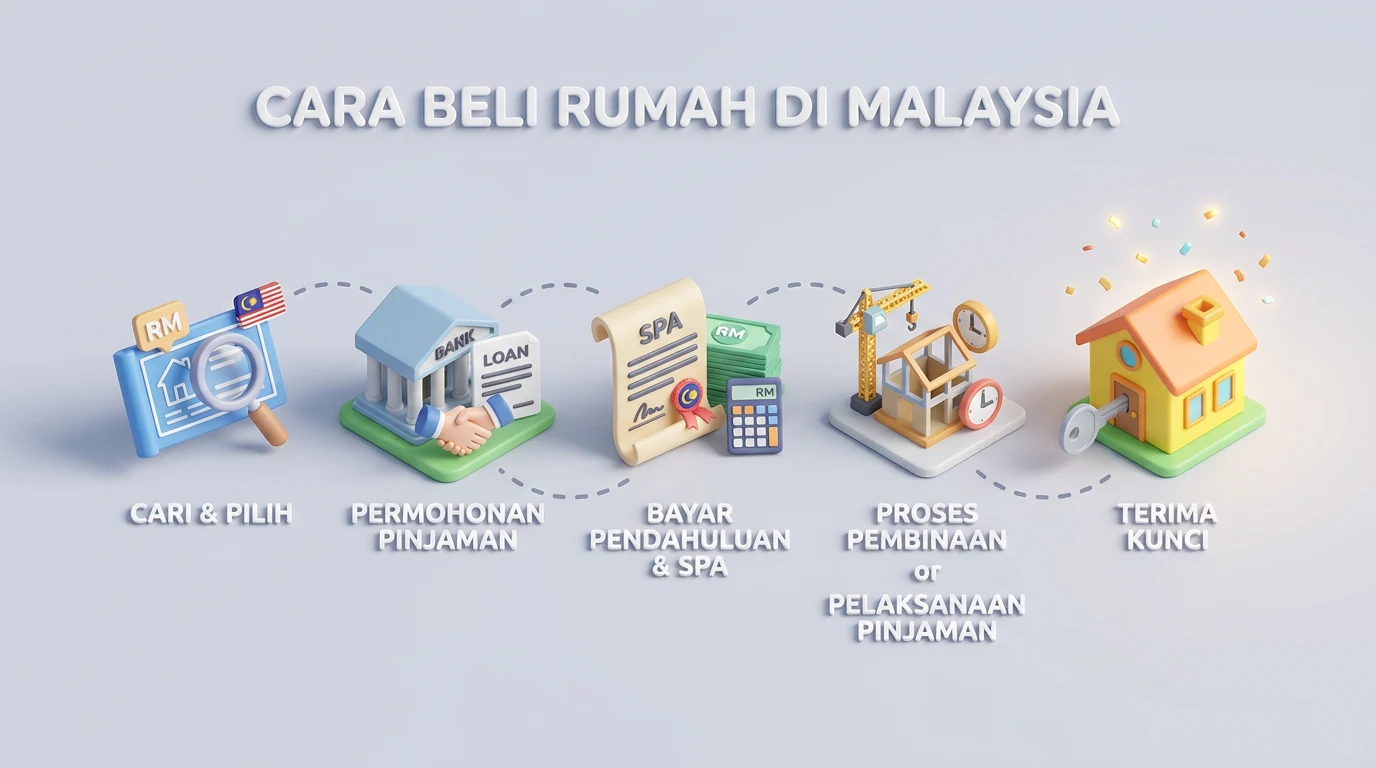
Buying a home in Malaysia involves more than finding a property and signing a contract. To understand how to buy a house in Malaysia, you’ll need to assess your budget, eligibility, financing options, and total purchase costs. Whether you’re a first time home buyer or an experienced purchaser, these checks should come first.
The process can differ by state and buyer type, especially for buyers from overseas. The latest Malaysia property market report also provides useful context on the property market in Malaysia.
This guide covers the main stages of the Malaysian home-buying process, from selecting a property to registration and handover. Some eligible buyers may also investigate Skim Jaminan Kredit Perumahan as a financing-support option, subject to the relevant criteria.
Key Takeaways
- Set a realistic budget that includes the down payment, loan instalments, legal fees, stamp duty, maintenance, insurance, renovations, and other purchase costs.
- Confirm your eligibility before paying a booking fee, including state rules, title restrictions, property category, and additional requirements for foreign buyers.
- Compare financing options and obtain preapproval where possible, but remember that preapproval is not a guarantee of final loan approval.
- Have an independent conveyancing lawyer review the title, booking terms, Sale and Purchase Agreement, consent requirements, and transfer documents.
- Inspect the property carefully before signing and at handover, and keep written records of defects, payments, documents, and agreed repairs.
Set a Realistic Budget Before You Start House Hunting
Before viewing properties, decide what you can comfortably afford each month and how much cash you can access now. The property purchase price is only one part of the budget. Your income, existing debts, loan tenure, interest rate, maintenance fees, and planned renovations all affect the real cost of owning a home.
A practical budget should include estimated monthly instalments, regular property charges, emergency savings, and buying costs. First time home buyer expenses can extend beyond the advertised price, so leave room for unexpected repairs or changes in income. For a new launch, also consider how a progressive payment schedule may affect your cash flow. A bank may approve a loan that stretches your finances, but approval doesn't automatically mean the payment is comfortable.
Work Out Your Down Payment and Upfront Cash
Confirm how much cash you need before making an offer. Malaysian banks commonly finance up to 90% for a borrower's first or second residential housing loan, while later loans may have a lower practical limit. However, the approved margin depends on your income, credit profile, debt service ratio, property, bank, and buyer type. Treat any headline percentage as a guide, not a guarantee.
Your cash requirement may include:
- The down payment not covered by the loan.
- A booking or earnest deposit paid before the SPA.
- SPA and conveyancing charges.
- Transfer stamp duty and loan agreement stamp duty.
- A property valuation fee, insurance, mortgage life insurance, renovation, and moving expenses.
Mortgage life insurance may be required or offered by the bank, depending on its policy and your loan terms. Its cost and availability can vary between lenders.
A booking payment is often requested when you sign a letter of offer or booking form. Before paying, check whether it will be credited toward the purchase price, when it can be refunded, and when the seller can keep it. Those terms should appear clearly in writing. Don't rely on verbal promises if your loan application or legal checks are still pending.
Ask your conveyancing lawyer and bank for a complete cost estimate based on the actual property price and expected loan amount. A legal fees and stamp duty calculator can help you understand the main charges, but your professionals should confirm the final figures.
Choose a Location and Property Type That Fits Your Plans
The right property depends on how long you expect to live there and what you need from the home. Landed houses usually offer more space and control over renovations, while condominiums and serviced apartments may provide facilities, security, and easier access to urban areas. A subsale property can offer an established neighborhood, but it may need repairs or updates before you move in.
Compare each option against your plans, not just its listing price. Check whether you prefer freehold properties or leasehold properties, review strata maintenance fees, and confirm whether a condominium has a strata title. Also check parking arrangements and estimate renovation costs. If you may rent the home later, study rental demand and nearby employment, transport, and education hubs.
Use available Malaysian property listings to compare homes across locations and property types. Then verify the tenure, built-up area, title status, maintenance charges, flood risk, and advertised facilities independently. Visit the neighborhood at different times, measure your commute, check schools and daily amenities, and consider how easily the property could resell if your plans change.
Check Whether You Can Buy the Property in That State
Before making an offer, confirm that you're eligible to buy the property. The Malaysian buying process depends on your citizenship, permanent resident status, property type, title conditions, and location.
Not every residential property is available to every buyer. A property may look suitable, but its title or state rules could prevent the transfer.
Understand the Rules for Malaysian Citizens and Permanent Residents
Malaysian citizens generally have wider access to residential property than foreign buyers. Malaysian permanent residents may also buy property, subject to legal and state requirements. However, citizenship or PR status doesn't remove the need for proper checks.
Before paying a booking fee, ask a Malaysian property lawyer to review:
- Whether the property is freehold or leasehold.
- The registered category of land and approved use.
- Whether the title contains restrictions in interest.
- Whether the unit is a Bumiputera-restricted lot or part of an affordable housing scheme.
- Whether the land is Malay Reserve Land or agricultural land.
- Whether a State Authority or other government consent is required.
- Whether any caveat, charge, arrears, or ownership issue affects the transfer.
The title is the property's legal instruction manual. It can contain conditions that aren't obvious from the listing, brochure, or agent's description. For a practical reminder of the searches involved, review these Malaysia property title restrictions before committing to a purchase.
A lawyer should also confirm whether the property has a resale restriction, development-specific condition, or land-use requirement. These checks matter even when you're buying an ordinary house from another Malaysian owner.
Know the Extra Requirements for Foreign Buyers
For foreign property buyers, residential transfers usually require written State Authority consent before registration. Buyers must also meet the relevant state's minimum purchase price. There is no single national threshold for every foreign buyer.
Rules can vary by state, district, property type, title, and housing category. Some states set different thresholds for landed homes and strata units. Certain properties may be unavailable to foreign buyers, including low-cost housing, Bumiputera-restricted units, Malay Reserve Land, and some agricultural or specially controlled properties.
Participation in the MM2H program doesn't automatically override state purchase thresholds, consent requirements, or property restrictions.
Check these points before signing a booking form:
- The state's current minimum purchase price.
- Whether the property category is open to foreign ownership.
- The consent process, required documents, and estimated timeline.
- Any limits on ownership, resale, or the number of eligible units.
- The total taxes and fees payable by your buyer type.
Any stamp duty exemption or preferential treatment depends on buyer status, property value, and current law. Don't assume that an exemption applies to foreign buyers.
From January 1, 2026, residential transfer stamp duty for many foreign individuals and foreign companies is reported as a flat 8%. The rule, rate, calculation basis, and exemptions are time-sensitive and should be verified with LHDN's property transfer guidance and the relevant state authority before publication or payment. Ask your lawyer to confirm the current position in writing.
Buying a House in Malaysia, Step by Step
Once your budget and eligibility are clear, the next steps can help you navigate the purchase process with fewer surprises. The process may differ between a new launch and a subsale property. The lawyer, bank, developer, seller, and land office may each handle different parts.
Find a Property and Inspect It Carefully
Start by comparing the property purchase price with recent sales of similar homes nearby. Consider the property type, tenure, built-up area, age, condition, and facilities. An asking price is only a starting point, not proof of market value. You can also use an AI property search assistant for Malaysia to compare suitable listings before arranging viewings.
A real estate agent can provide listing details, but you should inspect the property yourself. Visit during the day, and return at another time if possible. Check walls, ceilings, floors, plumbing, electrical points, doors, windows, leaks, pest damage, drainage, and renovation quality. For a condominium or apartment, inspect common areas, lifts, parking, security, swimming pools, gyms, and other facilities.
Ask the seller or agent about:
- Current occupancy and the expected handover date.
- Known defects, repairs, and renovation approvals.
- Outstanding maintenance fees or sinking fund contributions.
- Unpaid quit rent, assessment tax, or utility bills.
- Any disputes involving the management corporation or property.
For a subsale home, confirm exactly which fixtures and fittings are included. Air conditioners, built-in cabinets, water heaters, curtains, light fittings, kitchen appliances, and wardrobes should be listed clearly. Arrange an independent building inspection when possible. A professional may identify problems that a short viewing won't reveal.
Make an Offer and Review the Booking Terms
You can negotiate the price, completion timeline, included items, and repairs before making a written offer. Booking or earnest deposits are common market practices, but they aren't universal legal requirements. The amount may form part of your down payment, depending on the transaction and documents used.
Before paying, confirm whether the deposit is refundable, whether it will count toward the purchase price, and what happens if your loan is rejected. Check whether the seller can accept another offer while your financing or legal checks are pending. Never rely on verbal promises. Have your conveyancing lawyer review the booking form or letter of offer before you commit.
Sign the Sale and Purchase Agreement
The Sale and Purchase Agreement records the commercial terms of the transaction. It should state the purchase price, payment schedule, completion date, default remedies, vacant possession terms, and included fixtures.
The SPA may also contain conditions covering financing, state consent, developer consent, title restrictions, or other requirements. A developer sale usually follows the project's prescribed agreement and construction timeline. Buyers should understand the defect liability period and how defects are reported and rectified. They should also review the progressive payment schedule for construction-stage payments.
A subsale agreement deals with an existing owner, property condition, outstanding payments, and the transfer between seller and buyer. Ask your lawyer to clarify any seller-side tax or transaction obligations, including real property gains tax, that could affect completion.
Read every deadline carefully. Ask your lawyer to explain any clause you don't understand before signing or paying further funds. For general context on Malaysian acquisition costs, legal fees, and transfer duties, review this Malaysia real estate acquisition guide.
Complete the Transfer and Register the Title
Your lawyer will prepare Form 14A, the Memorandum of Transfer, and arrange the required stamping, duties, and charges. State Authority or developer consent may be needed before the documents can proceed. The completed documents are then lodged with the relevant land office or registry.
Once registration is completed, you become the registered owner. If you use a loan, the bank's charge over the property must also be registered. The exact timing depends on the title, consent requirements, financing, and transaction type.
After completion, collect the keys and take a final inspection. Confirm handover, record meter readings, arrange utility account changes, and obtain the stamped SPA, transfer documents, loan papers, mortgage life insurance details, receipts, warranties, access cards, and management records.
Secure Financing and Budget for the Full Cost of Buying
Financing affects how to buy a house in Malaysia as much as the property itself. Before committing, confirm the loan amount, monthly payment, upfront cash, and total purchase costs. Reviewing your income, debts, credit history, and the property helps determine your home loan eligibility. Compare the full financing picture, not just the advertised interest rate.
Compare Banks and Get Loan Approval Before Signing
Apply to several banks before signing a booking form or paying a non-refundable deposit. Preapproval or conditional approval estimates your borrowing capacity, but it isn't final approval. The bank can still reject or reduce the loan after reviewing the property valuation, title, legal documents, and final credit assessment.
A bank may request your identification documents, recent salary slips, bank statements, tax records, EPF statements, employment confirmation, and existing loan details. Self-employed applicants may also need business registration documents, management accounts, audited accounts, tax filings, and several months of business bank statements.
Banks assess your income, employment stability, credit history, existing debts, and Debt Service Ratio. A strong application shows stable income and manageable commitments. Check your credit records through the relevant credit reference system before applying. Avoid taking on new debt while the application is under review.
Reported housing loan approval rates were about 39.2% during the first four months of 2026, based on a market report citing Bank Negara Malaysia data. Approval isn't automatic, even when your income appears sufficient. Eligible applicants may also compare government-backed options, including the Skim Jaminan Kredit Perumahan.
Compare each offer by reviewing:
- The loan margin and the down payment you must provide.
- The loan tenure and whether the monthly instalments remain affordable.
- Fixed or variable rates, including how a rate change affects your payment.
- Flexi-loan features, redraw rules, linked-account requirements, and fees.
- The lock-in period and any early settlement fee.
- Late payment terms, default interest, and possible legal action.
- Valuation conditions, mortgage-related insurance, and bank charges, including mortgage life insurance.
A lower starting rate may cost more if the loan has restrictive terms or expensive fees. Ask each bank for a written illustration of the monthly payment and total expected cost. Check whether mortgage life insurance premiums, coverage, and policy requirements are suitable for your circumstances.
For a new launch, align the progressive payment schedule with the bank's financing drawdowns. This helps prevent unexpected cash shortfalls during construction.
Keep alternative financing options available, such as another bank, a joint application where appropriate, Skim Jaminan Kredit Perumahan, or a lower-priced property if the first application fails. A first time home buyer should also compare available assistance and exemption eligibility before committing.
Calculate Stamp Duty, Legal Fees, and Other Charges
Build a cost map before deciding what price range to target. For Malaysian citizens and permanent residents, transfer stamp duty generally applies progressively at 1% on the first RM100,000, 2% on the next RM400,000, 3% on the next RM500,000, and 4% above RM1 million, subject to current law and exemptions. The duty is commonly based on the higher of the property purchase price or market value.
The loan agreement stamp duty is commonly 0.5% of the loan amount. You may also pay SPA and loan legal fees, title and land searches, registration charges, a property valuation fee, bank processing costs, mortgage-related insurance, and other disbursements.
For eligible first-time Malaysian buyers, a reported 100% stamp duty exemption may apply to homes priced up to RM500,000 through December 31, 2027. Check the current stamp duty orders and verify the current stamp duty exemption, your eligibility, and the latest official rules directly with LHDN before relying on it. Ask your lawyer for a complete written estimate covering legal fees and every other charge, not only the transfer duty.
Complete Due Diligence and Avoid Expensive Delays
Due diligence means more than arranging financing and signing the SPA. You also need to verify the property before releasing further funds. A careful process protects you from ownership problems, unpaid charges, approval delays, and defects after handover.
Ask the Lawyer to Verify the Title and Property Documents
Use an independent conveyancing lawyer who represents your interests. A real estate agent's description isn't proof of ownership, title status, approved use, or transfer rights. Your lawyer should conduct the appropriate title and land searches. They should also compare the results with the SPA and the seller's documents.
Ask the lawyer to confirm:
- The registered owner's name and identity.
- The title number and property description.
- Whether the property is freehold or leasehold.
- The land category and approved use.
- Any restrictions in interest, caveats, charges, or other encumbrances.
- Whether quit rent and assessment payments are up to date.
- Whether the property has an individual title, strata title, or remains under a master title.
You can review how Malaysian land and strata titles work to understand the documents your lawyer may discuss with you. Leasehold transfers may require State Authority consent, especially where the title includes a restriction in interest. Restricted lots, Bumiputera units, Malay Reserve Land, and some housing schemes may have additional transfer conditions.
Timelines can differ for freehold properties and leasehold properties. State land offices handle many title searches, registrations, consents, and related processes. The correct procedure can vary between Selangor, Kuala Lumpur, Penang, Johor, Sabah, and Sarawak. Your lawyer must check the process for the state where the property is located, rather than rely on a general timeline.
The lawyer should also check development approvals, outstanding management charges, sinking fund payments, renovation permissions, and strata disputes. If the strata title is missing or still linked to a master title, ask who must complete the perfection of transfer. Confirm whether developer consent is required and whether Form 14A, the Memorandum of Transfer, must be signed or registered.
Protect Yourself During Handover
Before accepting vacant possession, inspect the property as if you're checking a used vehicle. Test the plumbing, electrical systems, lights, air conditioners, water heaters, built-in appliances, doors, windows, and drainage. Look for leaks, damp areas, cracked tiles, renovation damage, and agreed repairs that remain incomplete.
Check that you receive every key, access card, remote control, parking bay, mailbox key, and facility pass included in the SPA. Photograph each defect and send a written notice to the seller, developer, or management office. Keep copies of the SPA, loan documents, payment receipts, warranties, inspection records, and all correspondence.
After handover, arrange utility account changes, notify the management corporation, and confirm the final meter readings. Don't treat the keys as proof that the transaction is legally complete. Confirm that the contractual vacant possession condition has been met, registered ownership has been transferred, and the bank's charge has been registered.
A straightforward transaction may complete in about three months after the SPA. Financing, leasehold consent, foreign ownership approval, missing titles, strata issues, or developer delays can extend the process to three to six months or longer. Ask your lawyer for a written timeline with each approval and document deadline.
Frequently Asked Questions
How much cash do I need to buy a house in Malaysia?
You may need cash for the down payment, booking deposit, legal fees, transfer and loan stamp duty, valuation, insurance, renovations, and moving costs. The exact amount depends on the property price, loan margin, buyer status, and available exemptions.
Can foreigners buy houses in Malaysia?
Foreign buyers can purchase certain properties, but they must comply with the relevant state’s minimum purchase price, property restrictions, and State Authority consent requirements. Rules vary by state, district, title, and property type, so obtain legal confirmation before paying a deposit.
Should I get a home loan approved before signing the SPA?
Where possible, compare banks and obtain preapproval or conditional approval before signing a booking form or paying a non-refundable deposit. However, preapproval is not final approval because the bank may still assess the property, valuation, title, and final credit application.
What does a conveyancing lawyer do when buying a house?
The lawyer checks the title, ownership, restrictions, charges, outstanding payments, consent requirements, and transaction documents. They also prepare or review the SPA and transfer documents, arrange stamping and registration, and help coordinate completion.
How long does it take to complete a property purchase in Malaysia?
A straightforward transaction may complete in about three months after the SPA. Financing, leasehold or foreign ownership consent, missing titles, strata issues, and developer delays can extend the process to three to six months or longer.
Conclusion
Buying a house in Malaysia becomes more manageable when you follow a clear order: set your budget, confirm eligibility, inspect the property, secure financing, review the SPA, pay the required duties and fees, register the transfer, and inspect the home at handover. Each step protects you from a different financial or legal problem.
Before any money changes hands, verify current state requirements, property restrictions, housing schemes, and 2026 tax rules. Foreign buyers should confirm their buyer status, residential classification, transfer instrument date, and eligibility for any stamp duty exemption. Reviewing additional Malaysia property buying guides can help you prepare, but professional advice still matters.
A qualified Malaysian conveyancing lawyer and a careful comparison of financing and transaction costs, including mortgage life insurance and legal fees, can prevent costly mistakes. The strongest purchase decisions come from checking the details before signing, not trying to fix problems after completion.
Explore live listings
Search Malaysia property listings on PropPlace.my
Compare current listings, locations and agent details before you shortlist your next property.
Browse listings